
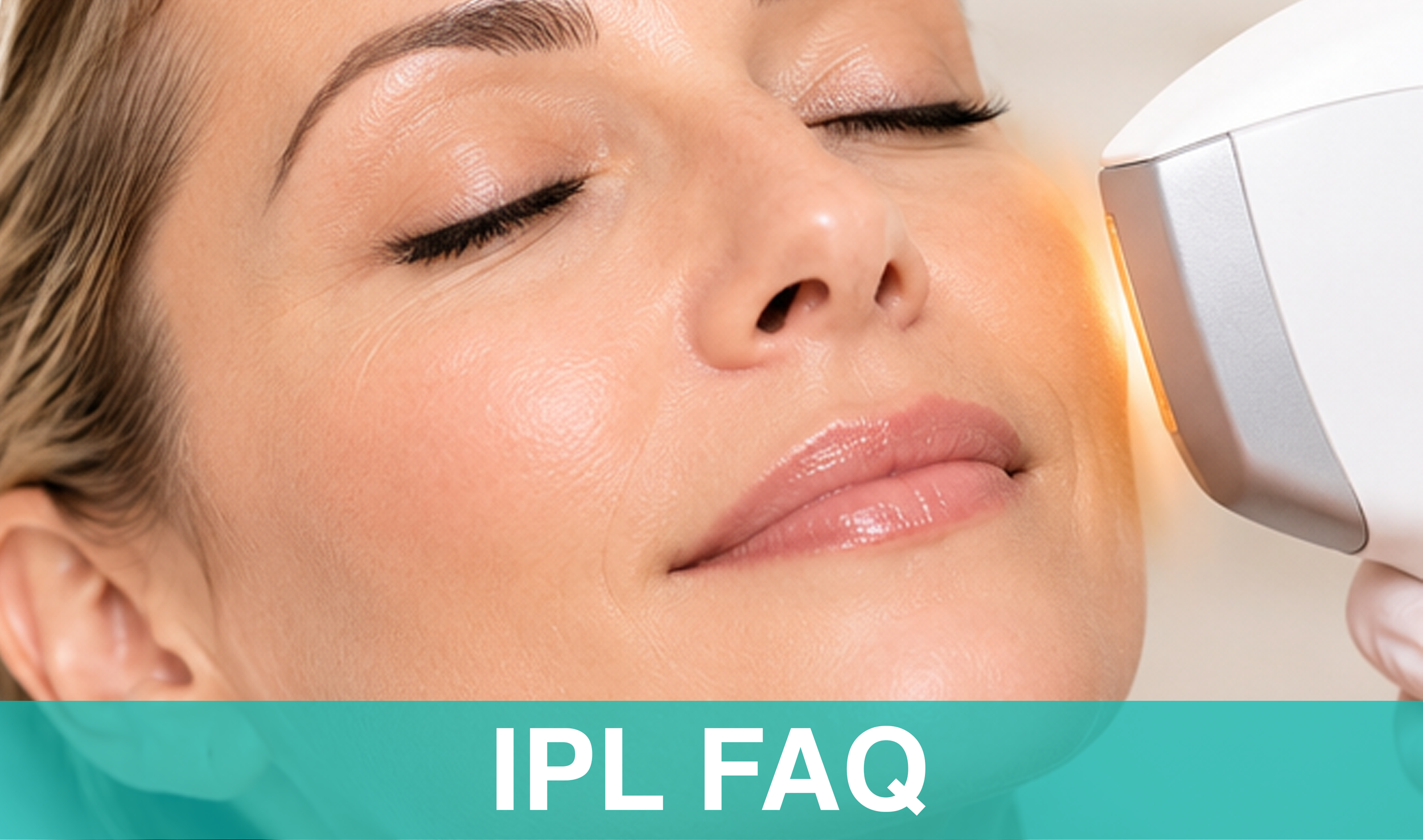
What is IPL?
IPL stands for Intense Pulsed Light. It is a non-invasive skin treatment that uses pulses of light energy to target common skin concerns, helping improve the appearance of uneven skin tone and sun-damaged skin.
IPL can help reduce the appearance of sun spots, age spots, brown pigmentation, redness, visible capillaries, and uneven skin tone, leaving your complexion looking clearer, brighter, and more even.
Unlike laser treatments that use a single wavelength of light, IPL uses a range of wavelengths to target different skin concerns. It is a popular option for those looking to refresh their complexion and achieve a more radiant, youthful-looking appearance without surgery
How does it work?
IPL (Intense Pulsed Light) works by delivering controlled pulses of light energy into the skin. This light is absorbed by specific targets, including melanin (the pigment responsible for brown spots) and hemoglobin (the pigment in red blood cells that contributes to visible redness and small blood vessels).
The absorbed light converts into heat, helping break down unwanted pigmentation so it can gradually fade as the skin naturally renews itself. IPL can also help reduce the appearance of certain types of redness and visible blood vessels.
Over a series of treatments, IPL can help improve the appearance of sun damage, age spots, uneven skin tone, and redness, leaving your complexion looking clearer, brighter, and more even
Is it painful?
Most clients find IPL treatments very tolerable. During the treatment, you may feel a brief, warm snapping sensation, often compared to a small elastic band flicking against the skin, followed by a feeling of warmth in the treated area.
The level of discomfort varies depending on your individual sensitivity, the area being treated, and the settings used. Some areas may feel more sensitive than others.
After treatment, your skin may appear slightly red or feel warm for a short time. Brown spots may temporarily darken before gradually fading as your skin heals.
At Resurface Skin, your comfort and safety are important to us. We tailor your treatment to your skin and its needs, so you can feel comfortable throughout the process
Are there side effects?
As with any skin treatment, some temporary side effects can occur and differ from individual to individual. Common side effects may include: Mild redness and warmth in the treated area, slight swelling, temporary darkening of brown spots before they gradually flake off or fade, mild skin sensitivity or tenderness for a short time after treatment.
Less commonly, IPL can cause blistering, burns, scarring, or changes in skin pigmentation, particularly when the treatment is unsuitable for the skin type or the skin has recent sun exposure.
To help minimize risks, it is important to avoid tanning and excessive sun exposure before and after treatment and follow your provider's aftercare instructions. Certain medications, skincare products, and skin conditions may also affect your suitability for IPL.
At Resurface Skin, your skin will be assessed before treatment to help determine whether IPL is appropriate for you. We will discuss potential risks, expected recovery, and aftercare so you know what to expect
Is it safe?
IPL (Intense Pulsed Light) is generally considered safe when performed by a properly trained provider using appropriate equipment and settings for your skin type. It is a non-invasive treatment that can help improve the appearance of sun damage, age spots, uneven skin tone, and certain types of redness.
As with any light-based treatment, IPL does carry some risks, including temporary redness, swelling, burns, blistering, and changes in skin pigmentation. The risk of complications can be higher for recently tanned skin, darker skin tones that are not suitable for the device, or when treatments are performed incorrectly.
Before your treatment at Resurface Skin, we will assess your skin, discuss your concerns, and review relevant medical history, medications, and sun exposure to help determine whether IPL is appropriate for you.
Your safety is our priority. Following pre-treatment and aftercare instructions, including avoiding tanning and protecting your skin from the sun, helps reduce the risk of complications and supports the best possible results.
IPL is not suitable for everyone, so a consultation is an important first step toward achieving clearer, more even-looking skin safely
Who is a good candidate for IPL?
IPL (Intense Pulsed Light) is an excellent option for many people who want to improve the appearance of sun damage, age spots, uneven skin tone, and certain types of facial redness.
You may be a good candidate for IPL if you:
Have sun spots, age spots, or brown pigmentation caused by sun exposure.
Notice uneven skin tone or a dull complexion and want a brighter, more even-looking appearance.
Have facial redness or small visible blood vessels that may respond to IPL.
Want to improve the appearance of sun-damaged skin without surgery.
Are looking for a non-invasive treatment with minimal downtime.
IPL is generally best suited to lighter skin tones, although suitability depends on the device and its settings. Darker skin tones may have a higher risk of burns or pigmentation changes with some IPL systems.
Who is not a good candidate for IPL?
Although IPL (Intense Pulsed Light) can be an effective treatment for improving the appearance of sun damage, pigmentation, and redness, it is not suitable for everyone. Your skin type, medical history, medications, and recent sun exposure all play an important role in determining whether IPL is safe for you.
You may not be a suitable candidate for IPL if you:
Have recently tanned skin or a sunburn. Increased melanin in the skin can raise the risk of burns and unwanted pigmentation changes.
Have a darker skin tone that is not suitable for the IPL device being used. Some skin tones have a higher risk of burns or pigmentation changes, depending on the equipment and treatment settings.
Are taking medications that increase light sensitivity or have recently used certain medications that may affect your suitability for treatment.
Have an active skin infection, open wounds, or irritation in the area being treated.
Have certain medical conditions or a history of photosensitivity that could make light-based treatments unsafe.
Are pregnant. Cosmetic IPL treatments are generally postponed during pregnancy as a precaution because safety has not been adequately established.
How long should I go between treatments?
For most cosmetic IPL treatments, appointments are typically spaced 3–4 weeks apart, although the ideal interval depends on your skin concerns, the area being treated, and how your skin responds.
For concerns such as sun spots, age spots, and uneven pigmentation, a series of treatments may be recommended to achieve the best results. Facial redness and visible blood vessels may also require multiple sessions.
Allowing enough time between treatments gives your skin time to recover and allows you to see how your skin responds before your next appointment. Some pigmentation may temporarily darken after treatment before gradually fading.
How many IPL treatments will I need?
The number of IPL (Intense Pulsed Light) treatments you need depends on your individual skin concerns, the severity of the concern, and how your skin responds to treatment.
Most clients benefit from a series of 3–5 treatments, typically spaced 3–4 weeks apart. Some concerns may improve with fewer sessions, while more persistent sun damage, pigmentation, or redness may require additional treatments.
You may notice improvements after your first treatment, but results typically develop over several weeks and may continue to improve throughout your treatment series